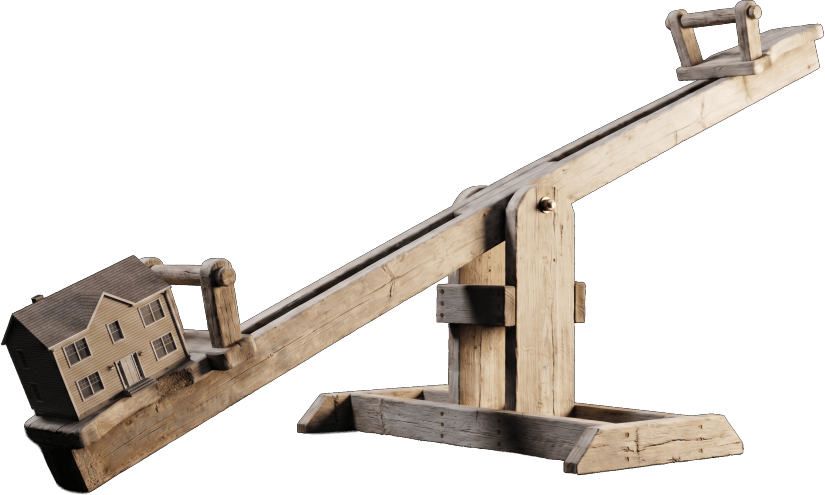

We know it’ll cost tens of billions. But the politicians haven’t told us how they’ll pay for it. This amendment could eventually bleed $34 billion from local government budgets.
The costs and consequences of this amendment will show up as higher rent, more expensive everyday purchases, costlier first homes, and in fewer small businesses that can’t absorb an increase in commercial property taxes.
Public safety is the single largest budget item in more than 80% of Florida communities, consuming more than half of every general fund dollar spent. Deputies, firefighters, paramedics. When billions leave the tax base with no replacement plan, that’s where the cut lands. There’s no version of this math where it doesn’t.
Buried in the amendment language is a legal mandate that could easily be overlooked: the Legislature must eliminate homestead property taxes entirely, on a fixed schedule. It doesn’t matter how it affects public safety, traffic, water, hurricane preparedness or anything else.

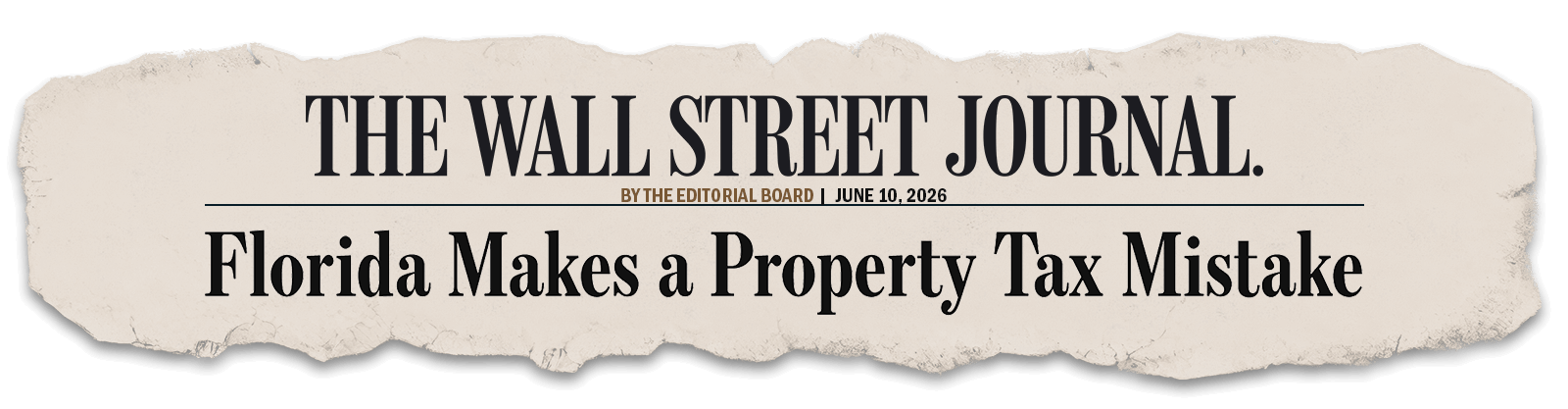
The problem is that shrinking the tax base in this way will inevitably drive localities to shift the burden to other forms of property...
WALL STREET JOURNAL · June 10, 2026
Reporters, economists, and local officials are asking the same question: who really pays when billions disappear from local budgets? See what they’re saying.

If this amendment passes, every Florida community will face critical shortfalls. This map shows how large that gap is relative to what each county already spends on public safety (e.g. law enforcement, first responders, firefighters). City dots show how much taxable value each municipality loses. Hover any county or city for details.
County heat map shows the FY 2028-29 revenue gap as a percentage of actual county public safety expenditure (law enforcement, fire, EMS, and corrections). Revenue gap figures from the Florida Association of Counties / Ad Valorem Revenue Estimating Conference, January 2026. Public safety expenditure from the FAC Florida County Property Tax Report, August 2025 (FY2024 audited data, Tables 6 and 7). Note: Hillsborough County’s ratio reflects public safety costs consolidated within the City of Tampa and may understate county-level exposure. City dots show homestead taxable value removed from local tax rolls at the $250K exemption level, sourced from the Florida Department of Revenue 2025 Real and Tangible Personal Property Tax Rolls. County and city figures are separate and do not overlap.
Squad cars, sidewalks, roads, bridges, and fire stations don’t magically become cheaper because homestead property taxes are cut or eliminated. The cost shifts. And the people who decide where it lands won’t be the ones living with the consequences.

You’re supposed to be the winner here, but the devil is in the details. Homeowners above $250,000 will instead absorb a larger share of a shrinking tax base as millage rates rise to close the gap. Homeowners below it get the exemption — and higher fees, rising sales taxes, and costs that filter down from businesses that can’t absorb their share either.
You don’t get the tax break. You get the bill. Here’s why: Apartment buildings and rental homes aren’t homesteaded, so this amendment doesn’t cut their taxes. When the local tax base shrinks, communities still have to fund law enforcement, roads, water management and every other critical service. So landlords get a bigger bill, and rent rises.
Florida’s sales tax is 6%. It may not stay that way. The Tax Foundation notes that sales taxes would need to rise to more than 15% if property taxes are eliminated. In some communities, it would exceed 30%. A sales tax increase hits hardest on working families who spend most of what they earn, and unlike a property tax break, it offers no exemptions for the people who can least afford it.
When billions disappear from the local tax base, the burden compresses onto everything else. Small businesses are what’s left to squeeze. Businesses and commercial properties already carry nearly two-thirds of Florida’s entire property tax burden.
Young families trying to buy their first home get the worst of both sides. Higher impact fees at closing, because communities need to cover the funding gap. And a tax base that’s been hollowed out, leaving fees and charges to cover what property taxes no longer fund.

Big cities have commercial properties, corporate offices, and tourism infrastructure to cushion the blow. Smaller communities don’t. Suburban and rural Florida relies more heavily on homeowner property taxes. When that base shrinks, there’s no large commercial sector to absorb the difference. There’s just less. Less for roads, for deputies, or for the fire station that covers a 40-mile radius.
The promise was lower taxes. What wasn’t promised: that roughly half of Florida’s counties won’t be able to fund basic services without going to Tallahassee for grants. That taxpayers in solvent communities will subsidize the shortfall in struggling ones. That the people deciding how your town funds its deputies and fire stations will be legislators who don’t live there.
When billions disappear from the local tax base, there are only two ways this ends: Cut the things your community depends on. Or make someone else pay for them.
There is no third door.
Cut It
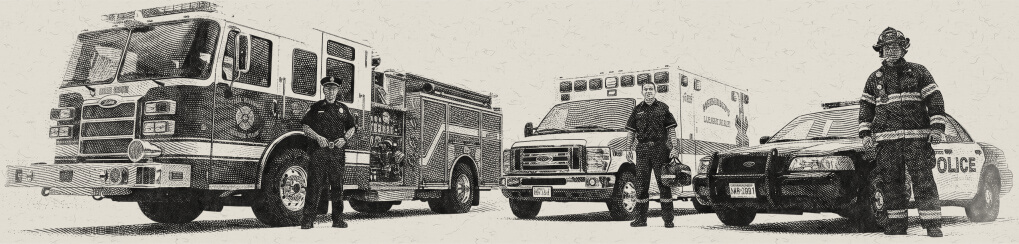
Public safety is the single largest budget item in most Florida communities. Police, firefighters, paramedics. These aren't discretionary line items. They're what your property taxes fund. When billions leave the local tax base with no replacement plan, communities pay the price: Fewer deputies on patrol. Slower response times. Fire stations that can't stay fully staffed.
Shift It
Law enforcement budgets shouldn't depend on whether Tallahassee is in a generous mood. But when local revenue disappears and communities can't cover public safety on their own, that's exactly where this goes. Annual appropriations. State approval. Decisions about your law enforcement officers and fire stations made by people who don't live there. That's not tax relief. That's a politician power grab.
Cut It
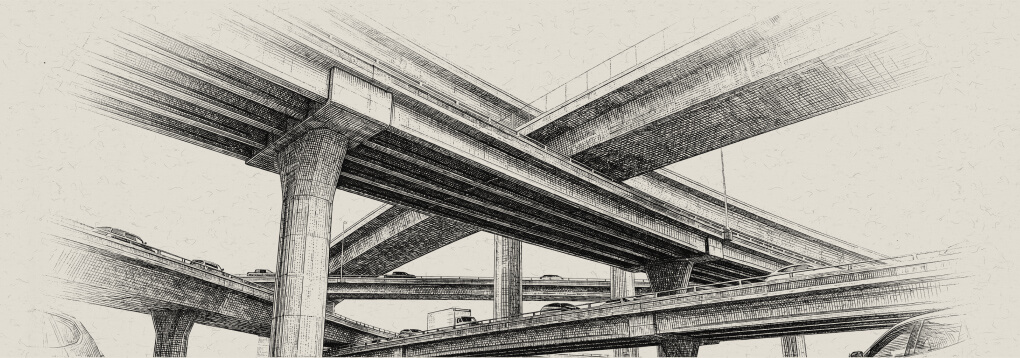
Roads don't maintain themselves. Neither do bridges, or stormwater systems, and in Florida, those aren't amenities. They're state-mandated obligations that communities are required to fund. When the tax base shrinks by billions with no replacement plan, something has to give. The road that needs repaving doesn't get repaved. The bridge that needs inspection gets a weight-restriction instead. The stormwater system struggles to compete with the routine afternoon showers.
Shift It
We still need roads and bridges, and we still need to make sure that the stormwater is drained away. But with billions leaving the local tax base and no replacement plan, the burden shifts to whoever is left on the tax rolls. Rentals. Small businesses. Families who moved to Florida after the deadline and don't qualify for the exemption. They didn't get the break. They get the bill.
Cut It
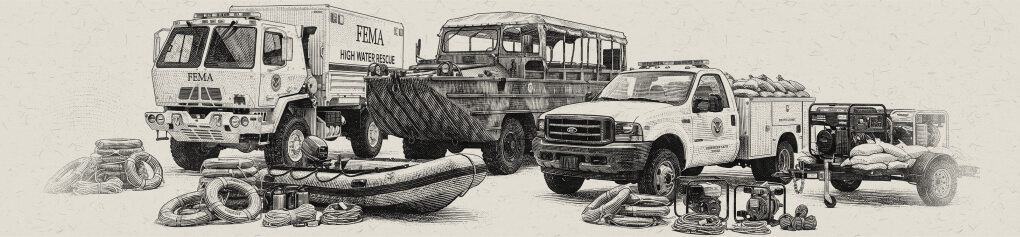
Disaster planning, emergency staging, storm response are funded locally, and they have to be ready before a storm. But, since this amendment would erode the local tax base, communities will struggle to resource disaster preparedness. Worse still, the communities most exposed to storms are often the ones with the smallest tax bases. They have the least room to cut and the most to lose.
Shift It
When local revenue falls short, the state fills the gap. And the state doesn't have a money tree, it has taxpayers: Renters. Businesses. Shoppers. Those who don't own a home yet. The cost of this exemption doesn't disappear. It just moves to Floridians, and eventually, to all Floridians in the form of higher sales taxes, higher fees, and more expensive good and services from those bearing a heavier burden.

“Repealing the property tax is an aspiration, not a plan. If proponents of property tax elimination have plans for how to replace it, voters should have an opportunity to evaluate those plans in advance. And if they don’t have a plan, voters should know that too.”
Tax Foundation, June 2026
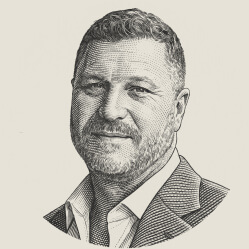
“What we have is a bumper sticker, we have a slogan, but we don’t have a policy. We haven’t even seen the back of a napkin that shows how this will work, let alone a full, responsible plan. We also know it will bankrupt some cities and counties.”
former Republican State Senator,
Florida Policy Project, 2026

“The various plans […] to eliminate property taxes look a lot less like a libertarian plan to shrink city hall and more like a plan to rob Peter instead of Paul.”
Reason Magazine, October 2025

“I would love not having property taxes, but I love it when I can have police and fire workers.”
President and CEO, Florida TaxWatch,
Sanibel-Captiva Chamber, 2026
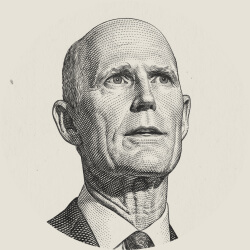
“I’d love to get rid of the property taxes. Unfortunately, you’ve got to think about what you’re going to replace it with. So how are you going to fund education and transportation, the environment, things like that?”
former Florida Governor, Fox Business / WGCU, May 2026
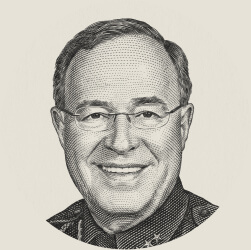
“In its current form, I fear the proposal will devastate counties’ and cities’ ability to deliver vital services, including emergency services, to our citizens…We have got to be careful about how we do this — we have to watch out for unintended consequences.”
Sheriff, Polk County, Florida
`The people behind this amendment spent years building toward November, and the window between now and then is rapidly closing. The funding gap on your county’s map is not hypothetical. Neither is what it takes to close the information gap before the vote.
By contributing today, you can put the real numbers in front of your fellow Floridians before they walk into the polls. If you believe Florida voters deserve the full picture before they decide, this is where that work gets funded.
Contributions are subject to Florida campaign finance law.
You’ve seen the math, but most Floridians haven’t.
Forward this page to a Florida voter.
Sign up and we’ll send you the facts, not the spin.